


 Français
 Italiano
 Deutsch
Curiosities, Vineyard & cellar
Moscato d’Asti and Piemonte Moscato DOC: the differences, and why we chose freedom
Jan
People tasting our wine often ask us: “Is this a Moscato d’Asti?” The answer is no, and it is a deliberate choice. Ours is a Piemonte Moscato DOC. Here is, in plain words, what sets the two denominations apart and why our family chose the second one.
In short. Moscato d’Asti and Piemonte Moscato DOC come from the same grape, Moscato bianco, and often from the same hills. What changes are the rules: Moscato d’Asti DOCG is always sweet and lightly sparkling, with 4.5–6.5% vol. actual alcohol and no more than 2.5 bar of pressure; Piemonte Moscato DOC gives the producer more freedom over style and harvest timing. Our wine is a Piemonte Moscato DOC.
Same grape, two denominations
Both wines are made from Moscato bianco (Muscat Blanc à Petits Grains), one of the oldest and noblest aromatic grapes of Piedmont, grown for centuries on the hills between the provinces of Asti, Cuneo and Alessandria. Santo Stefano Belbo, our village, lies at the heart of this area.
The difference is not the grape but the production rules, the disciplinare that each denomination sets for itself.
Moscato d’Asti DOCG
Moscato d’Asti is a type within the Asti DOCG, the top tier of Italy’s quality pyramid. It is famous worldwide and follows precise rules:
- it comes from a defined group of municipalities in the provinces of Asti, Cuneo and Alessandria;
- the finished wine must have an actual alcohol between 4.5% and 6.5% vol., so it is always a sweet, low-alcohol wine;
- the maximum yield is 10 tonnes per hectare, and every year the consortium and the Region may set further limits (for the 2026 harvest, for example, the yield was set at 8.5 tonnes);
- pressure may not exceed 2.5 bar: it is a gently sparkling wine.
Piemonte Moscato DOC
Piemonte DOC is a regional denomination covering many wine types, Moscato among them. Its rules for Moscato are different:
- the wine must contain at least 85% Moscato bianco (100% for the passito);
- it must have a total alcohol of at least 10.5% vol., of which at least 4.5% actual, with no upper limit on actual alcohol;
- the taste may range from dry to sweet, and the sweetness level must be stated on the label;
- the maximum yield is 11.5 tonnes per hectare.
In practice, Piemonte Moscato DOC gives the producer more room to decide the style of the wine, depending on what the vineyard gives in each vintage.
Why we chose Piemonte DOC
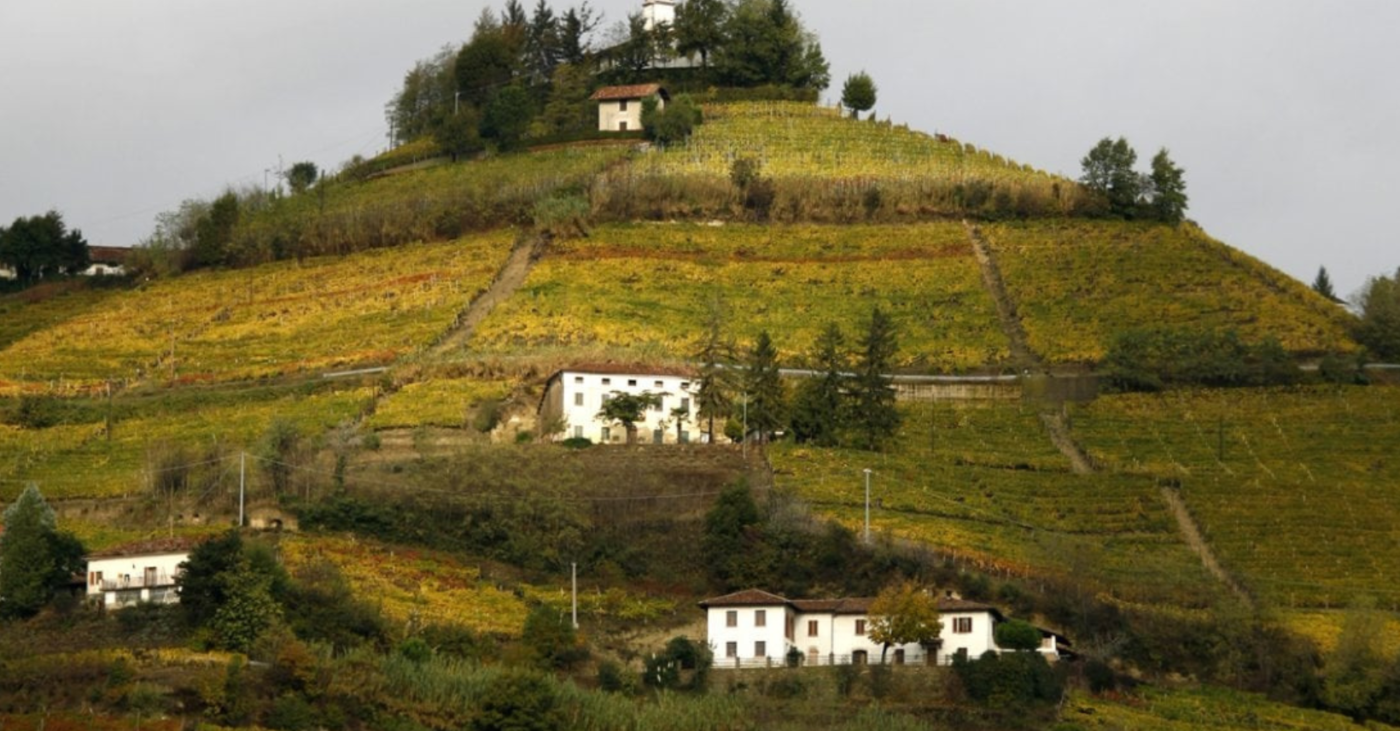
Our vineyards on the Moncucco hill face almost entirely south. It is a generous exposure that ripens the grapes fully, sometimes earlier than elsewhere. In the late 1990s Piero Gatti realised that the harvest timing then linked to the DOCG did not allow him to pick his Moscato every year at the moment he considered best.
So he chose Piemonte DOC: to follow the grapes, not the calendar, and to interpret each vintage without forcing it. The same philosophy guides Barbara Gatti today.
What changes in the glass
Our Piemonte Moscato DOC has 5.5% vol., a straw-yellow colour and aromas of honey, ripe fruit, peach and pear with a light citrus note. On the palate it is delicately aromatic, its sweetness balanced by moderate freshness and a light fizz. Anyone used to Moscato d’Asti will recognise the same family of aromas, with the imprint of one specific vineyard and one specific way of working. It is also certified vegan.
Moscato d’Asti DOCG and Piemonte Moscato DOC compared
| Moscato d’Asti DOCG | Piemonte Moscato DOC | |
|---|---|---|
| Denomination | Asti DOCG, Moscato d’Asti type | Piemonte DOC, Moscato type |
| Grape | Moscato bianco | at least 85% Moscato bianco (passito 100%) |
| Area | defined municipalities in the provinces of Asti, Cuneo and Alessandria | regional denomination, wider area |
| Actual alcohol | 4.5–6.5% vol. | at least 4.5% vol., no upper limit |
| Minimum total alcohol | 11% vol. | 10.5% vol. |
| Style | sweet, lightly sparkling (max 2.5 bar) | from dry to sweet, sugar level stated on the label |
| Maximum vineyard yield | 10 t/ha | 11.5 t/ha |
Frequently asked questions
Is your wine a Moscato d’Asti?
No. It is a Piemonte Moscato DOC, made from Moscato bianco grapes from our vineyards in Santo Stefano Belbo, on the Moncucco hill.
Is Santo Stefano Belbo in the Moscato d’Asti area?
Yes, the village is in the heart of Moscato country. But the denomination on the label does not depend only on the place: it depends on the rules the producer chooses to follow.
What is the difference between Moscato d’Asti and Asti Spumante?
They are two types of the same DOCG. Moscato d’Asti is lightly sparkling, with at most 2.5 bar and 4.5–6.5% vol. actual alcohol; Asti is a fully sparkling wine, with more bubbles and at least 6% vol. actual alcohol.
At what temperature should Moscato be served?
Well chilled, at 6–8 °C (43–46 °F), in a tulip-shaped glass that gathers the aromas.
What does it pair with?
Baked and fruit desserts: panettone, pandoro, hazelnut cake, tarts and paste di meliga biscuits. It also works surprisingly well with blue cheeses.
Is Piemonte Moscato DOC as sweet as Moscato d’Asti?
It can be: the rules allow styles from dry to sweet. Ours is sweet and lightly sparkling, at 5.5% vol.
Which one to choose?
There is no “better” Moscato in absolute terms: the denomination guarantees origin and rules, the quality is made by the producer. Our advice is to taste, compare and read the label. You can try ours by ordering it from our online shop, also in half bottles.
Sources: Asti DOCG production rules (Regione Piemonte) and Piemonte DOC production rules. Updated 26 November 2026.

Piemonte Moscato DOC

Red Wine


Vini Bianchi

Passiti-vendemmia tardiva

Piemonte Brachetto DOC


Grappa
