


 Français
 Italiano
 Deutsch
Curiosities, Vineyard & cellar
Bees, biodiversity and Moscato: why our wine smells of honey
May
World Bee Day is celebrated on 20 May, established by the United Nations to highlight the essential role of pollinators for agriculture and biodiversity. The date marks the birth of Anton Janša, an eighteenth-century Slovenian beekeeper considered a pioneer of modern beekeeping. It is a chance to tell the story of a curious connection: the one between bees, the vineyard and the honey aroma of Moscato.
Does the vine need bees?
Surprisingly, not much. The flowers of the cultivated vine are largely hermaphrodite and self-pollinate, with help from the wind. So bees are not essential for producing grapes, as they are for many fruit trees.
And yet bees are in the vineyard, and they are an excellent sign. They visit the grass and wild flowers between the rows and, at the end of summer, approach the ripe bunches, attracted by the sugars. A vineyard where bees find food is a vineyard where the soil is alive and biodiversity is rich.
Biodiversity between the rows
Farming without herbicides means leaving room for wild grasses and flowers, which become shelter and food for bees, butterflies, ladybirds and other useful insects. These, in turn, help maintain the vineyard’s natural balance. It is one of the reasons we have always chosen to manage the grass by mowing, as we explain in our article for Earth Day.
The “apiana” grape: an ancient link
In ancient Rome, Pliny the Elder wrote of a grape called apiana, so loved by bees that it was named after them. According to some scholars, this name referred to very sweet aromatic grapes, ancestors of the muscats. The origin of the word “moscato” is also debated: some link it to musk, for its intense aroma, others to the fly (mosca), attracted by the grape’s sweetness. We told other legends in the article on the mythology and culture of Moscato.
Why Moscato smells of honey
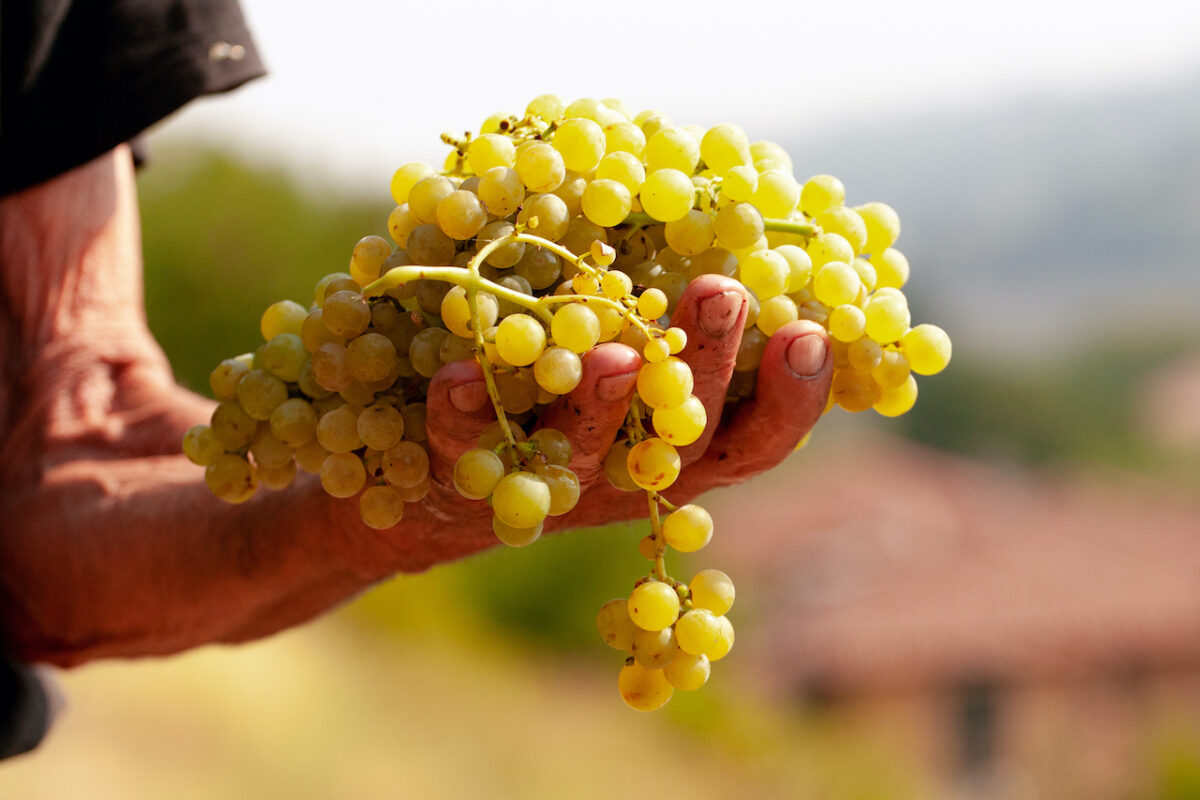
Moscato bianco is an aromatic grape: its skins contain fragrant molecules called terpenes, such as linalool and geraniol, which give notes of flowers, citrus, sage and peach. With the ripening of the grapes and the work in the cellar, sweeter, more enveloping sensations are added, which our nose associates with honey.
It is one of the signatures of our Piemonte Moscato DOC: on the nose there are aromas of honey, ripe fruit, peach and pear, with a faint hint of citrus. In passito wines from dried grapes, like our Vignot, the sweet, honeyed notes tend to become even more intense.
Moscato and honey at the table
The link between bees and Moscato also works at the table. A few ideas:
- fresh or blue cheeses with acacia or chestnut honey, with a glass of Moscato or Vignot;
- hazelnut cake with a drizzle of honey, with Vignot;
- Greek yoghurt, honey and fresh fruit, for a festive breakfast with Moscato;
- baked peaches with honey and amaretti.
Protecting pollinators
Bees are threatened by habitat loss, excessive use of chemicals and climate change. Everyone can do something: leave a flowering corner in the garden, choose products grown with respect, support local beekeepers. We do it our way, farming our vineyards as our grandparents did.
Our wines are available in the online shop.

Piemonte Moscato DOC

Red Wine


Vini Bianchi

Passiti-vendemmia tardiva

Piemonte Brachetto DOC


Grappa
