


 Français
 Italiano
 Deutsch
Vineyard & cellar
How Moscato is made: from the vineyard to the bottle, step by step
Aug
A sweet, aromatic, light and gently sparkling wine does not happen by chance. Here is how Moscato is made, the wine that has been at the heart of our family’s work for three generations. Time and temperature are everything.
1. Harvest at the right moment
It all starts in the vineyard. Moscato is an early-ripening aromatic grape: it must be picked when sugar, acidity and aromas are in balance. We harvest by hand, in small crates, to bring whole, healthy bunches to the cellar. Choosing the picking day, vineyard by vineyard, is the most important decision of the year. It is also why we produce Piemonte DOC.
2. Gentle pressing
In the cellar the grapes are pressed delicately. Soft pressing extracts the finest juice without crushing skins and seeds, which would add bitter, green flavours. The result is the must, an intensely sweet and fragrant grape juice.
3. Cleaning the must
The fresh must contains solid particles. Before going further it is clarified, separating the clear part from the solids. A clean must gives a finer, more fragrant wine.
4. Must kept cold
Here is one of Moscato’s secrets. The must is kept at a very low temperature, close to zero: at this temperature the yeasts cannot work and fermentation does not start. The must keeps its aromas intact, and the producer can decide when to start fermentation, even in several batches during the year, to always have a fresh wine.
5. Fermentation in pressure tanks
When the time comes, the must is moved into an autoclave, a pressure-resistant stainless steel tank, and slightly warmed so the yeasts can work. Fermentation takes place at a controlled temperature: the yeasts turn part of the sugar into alcohol and carbon dioxide. Since the tank is closed, the carbon dioxide stays dissolved in the wine: this is Moscato’s natural fizz.
6. Stopping fermentation
The wine must not become dry. When alcohol reaches the desired level, around 5.5% vol. in our Piemonte Moscato DOC, fermentation is stopped by lowering the temperature. The remaining sugar gives the wine its natural sweetness.
7. Filtration
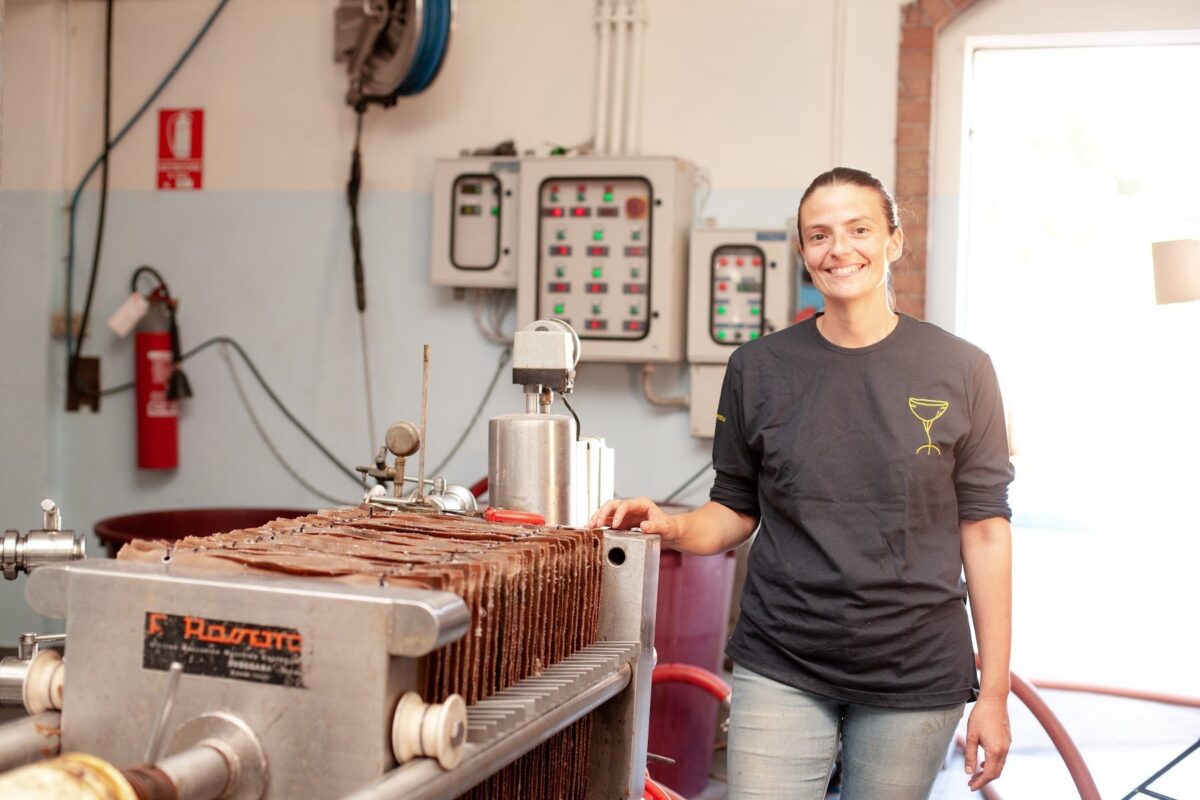
The wine is then filtered to remove yeasts and any suspended particles. This guarantees clarity and stability and prevents fermentation from restarting in the bottle. For our Moscato, certified vegan, cellar aids are chosen without any substance of animal origin, as we explain in our article on vegan wine.
8. Isobaric bottling
Finally, bottling. Our winery was among the first to use isobaric technology for Moscato and Brachetto: bottles are filled at the same pressure as the tank, so the wine loses neither its bubbles nor its aromas.
Brachetto: same family, one extra step
Brachetto follows a similar path, with one difference: being a red grape, its skins usually stay in contact with the must for a short time, to release colour and aromas of rose and strawberry. The result is the delicate purple colour of our Piemonte Brachetto DOC.
Behind a bottle of Moscato there are months of work in the vineyard and weeks of care in the cellar, where every degree matters. You will find the result in our online shop.

Piemonte Moscato DOC

Red Wine


Vini Bianchi

Passiti-vendemmia tardiva

Piemonte Brachetto DOC


Grappa
