


 Français
 Italiano
 Deutsch
Curiosities, Vineyard & cellar
DOCG, DOC, IGT: how to read a Piedmontese wine label
Feb
In front of a wine shop shelf or a winery’s online shop, the wine label is the first tool we have for choosing. But among acronyms, terms and mandatory statements it is not always easy to find your way. Here is a practical guide, with particular attention to Piedmont.
The quality pyramid
In Italy, wines are divided into categories, from the broadest to the most restricted:
- Wine (without geographical indication): it can come from any area and does not follow territorial production rules.
- IGT, Indicazione Geografica Tipica (in the EU, PGI): wines linked to a broad area, with more flexible rules.
- DOC, Denominazione di Origine Controllata (in the EU, PDO): wines produced in a defined area according to production rules (disciplinare) that set grape varieties, yields, characteristics and cellar practices, with checks by an independent body.
- DOCG, Denominazione di Origine Controllata e Garantita (also PDO): the highest level. A wine can become DOCG if it has been DOC for at least ten years and has recognised renown; the rules are stricter and the checks more extensive.
The case of Piedmont
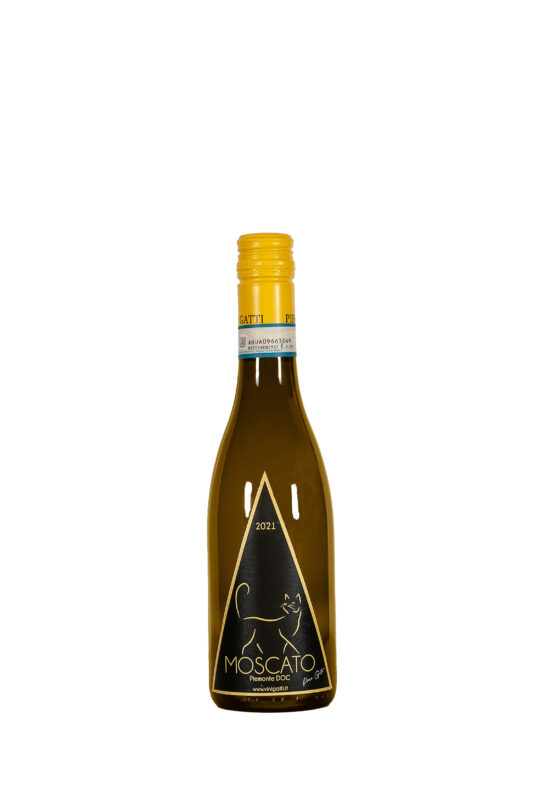
Piedmont is the Italian region with the most denominations: 19 DOCG and 41 DOC, and no IGT. Over 80% of the wine produced in the region has a designation of origin. Alongside famous names like Barolo, Barbaresco or Asti, there are broad denominations such as Piemonte DOC, which covers most of the region’s wine areas and includes many types: Moscato, Brachetto, Barbera, Chardonnay, passito wines and others.
It is the denomination we chose for our Moscato and Brachetto, for the reasons we explained in the article on Moscato d’Asti and Piemonte Moscato DOC.
Mandatory information
On every label of a wine with a designation of origin you will find:
- the denomination (for example “Piemonte” followed by “Denominazione di Origine Controllata” and the wine type);
- the nominal volume (0.75 l, 0.375 l…);
- the actual alcoholic strength in % vol.;
- the name and address of the bottler;
- the country of origin and the lot number;
- allergens, such as “contains sulphites”;
- since 8 December 2023, also the list of ingredients and the nutrition declaration, which can be accessed via a QR code (the energy value must remain on the label).
For some wine types the production rules add further requirements. In the Piemonte DOC, for example, the vintage is mandatory for still wines, and for Moscato and Brachetto the sugar content (secco, abboccato, amabile, dolce) must be stated in clearly legible characters.
Optional information
Many labels also show the wine’s brand name, the grape variety, pairing suggestions, serving temperature or voluntary certifications. Our Moscato, for example, is certified vegan with the V-Label.
Beware, however, of words the production rules prohibit: in the Piemonte DOC, terms such as “superiore”, “riserva”, “selezione” or similar may not be used, nor geographical indications smaller than the denomination.
The state seal
On the neck of many bottles with a designation of origin there is a strip with a serial number: this is the state seal (contrassegno di Stato), which guarantees the traceability of each individual bottle. It is compulsory for DOCG wines and also required for many DOCs.
A practical tip
Reading the label means understanding where a wine comes from and which rules it follows. The glass tells you the rest. If you want to practise, our series How to taste wine properly is a good place to start. And you will find our wines, with their labels, in the online shop.

Piemonte Moscato DOC

Red Wine


Vini Bianchi

Passiti-vendemmia tardiva

Piemonte Brachetto DOC


Grappa
