


 Français
 Italiano
 Deutsch
Territory & traditions
Langhe-Roero and Monferrato, UNESCO World Heritage: the wine landscapes where our wines are born
Jun
On 22 June 2014, during the session of the World Heritage Committee in Doha, the Vineyard Landscape of Piedmont: Langhe-Roero and Monferrato was inscribed on the UNESCO World Heritage List. It was the fiftieth Italian site to receive this recognition. Today is the anniversary, and a chance to explain what it means to live and work in a UNESCO World Heritage landscape.
A cultural landscape
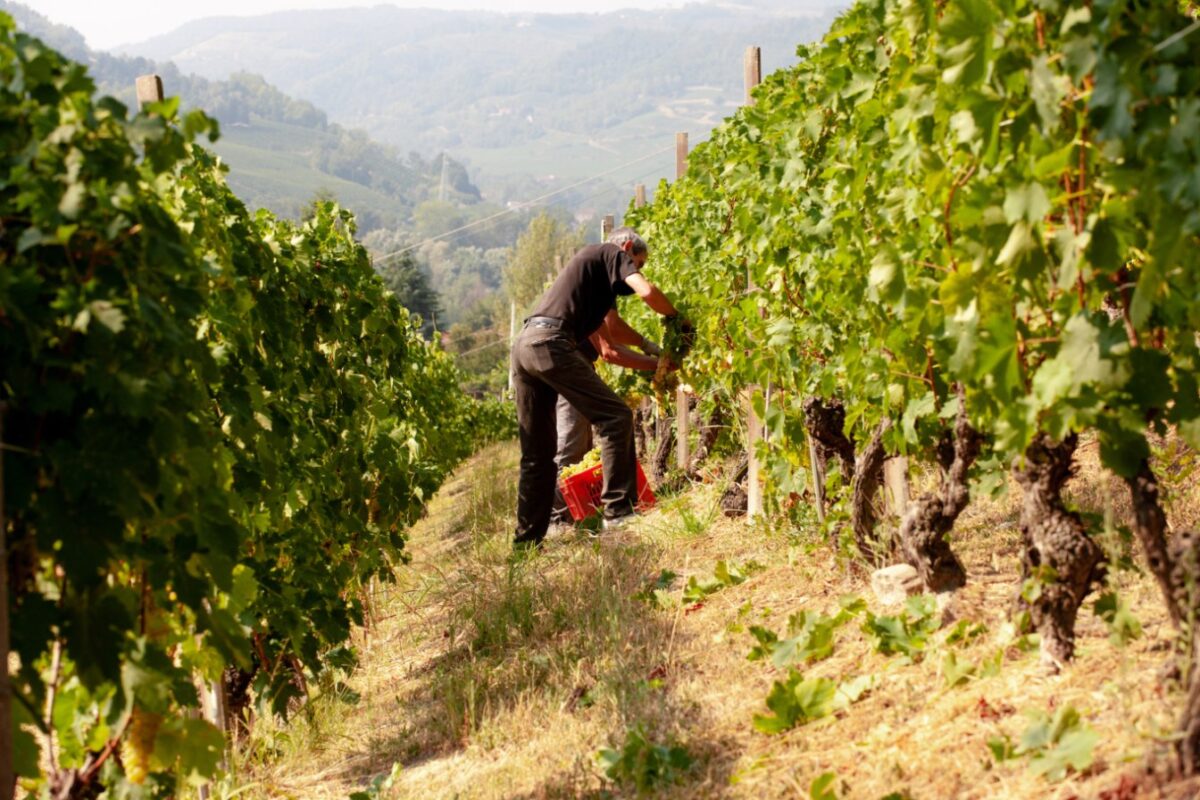
UNESCO did not reward only the beauty of the hills, but the cultural landscape: the result of centuries of human work, which shaped the slopes with vine rows, built farmhouses, wineries and villages, and developed a unique wine culture. It is a living landscape, in which winegrowing is still the main activity today.
The six components of the site
The site is made up of six areas, each linked to a wine or to an aspect of wine culture:
- the Langa of Barolo;
- the Castle of Grinzane Cavour;
- the hills of Barbaresco;
- Nizza Monferrato and Barbera;
- Canelli and Asti Spumante;
- the Monferrato of the Infernot.
Around these areas there is a wider zone, called the buffer zone, which protects their context.
Where our vineyards are
Our vineyards are right in this landscape. Santo Stefano Belbo is a few kilometres from Canelli, with its famous underground cathedrals, the historic cellars dug into the hill where sparkling wines are aged. One of our vineyards is in Nizza Monferrato, capital of Barbera and one of the six components of the site. Another is in Cossano Belbo, in the Langhe, where we grow Furmentin.
The Canelli component tells in particular the story of Moscato and Asti Spumante, which developed right in these hills and cellars between the nineteenth and twentieth centuries. It is the story of the grape that has been at the heart of our work for three generations.
What it means for those who work here
Being part of a UNESCO landscape is an honour, but also a responsibility. It means:
- taking care of the landscape, maintaining vineyards, headlands, woods and farmhouses;
- farming respectfully, because the quality of the landscape depends on the health of the soil and the vines;
- welcoming those who come to discover these hills, telling them about the work behind every bottle.
For us this translates into concrete choices, such as farming without herbicides, using organic fertilisers and harvesting by hand, which we described on Earth Day.
Pavese’s hills
This landscape also has a literary dimension. Cesare Pavese, born in Santo Stefano Belbo, described it in unforgettable pages, up to his last novel, “The Moon and the Bonfires”. We talked about it in the first part of our journey to Santo Stefano Belbo.
Come and visit us
The UNESCO hills are best discovered on foot or by bike, along the roads between the vines, stopping in villages and wineries. If you are passing through Santo Stefano Belbo, contact us for a visit: we will tell you how our wines are made, among the Moncucco vineyards. And if you want to take home a piece of this landscape, our wines are in the online shop.

Piemonte Moscato DOC

Red Wine


Vini Bianchi

Passiti-vendemmia tardiva

Piemonte Brachetto DOC


Grappa
